Coming soon to the App Store
Look up at the right moment.
Catch a Rainbow brings live weather clues, rainbow geometry, and community sightings together so you can notice when conditions may be lining up nearby.
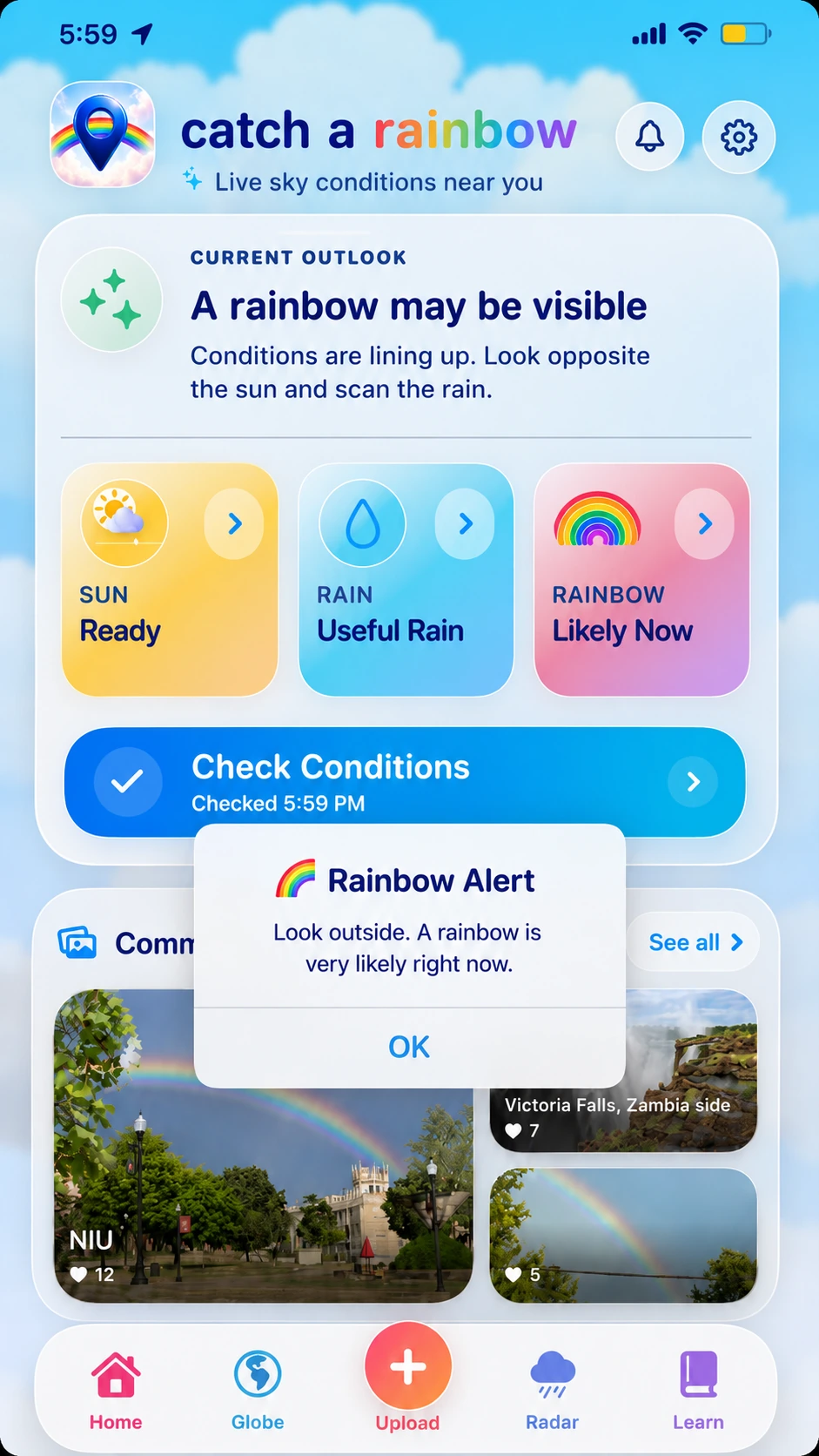
One clear outlook
Know when it may be worth looking outside.
The app turns several live clues into a friendly explanation instead of showing only a weather percentage.
Inside catch a rainbow
Explore the app.
See how live conditions, community sightings, learning tools, and the interactive globe come together.

Live conditions and alerts
See the live outlook and receive a clear alert when conditions line up.
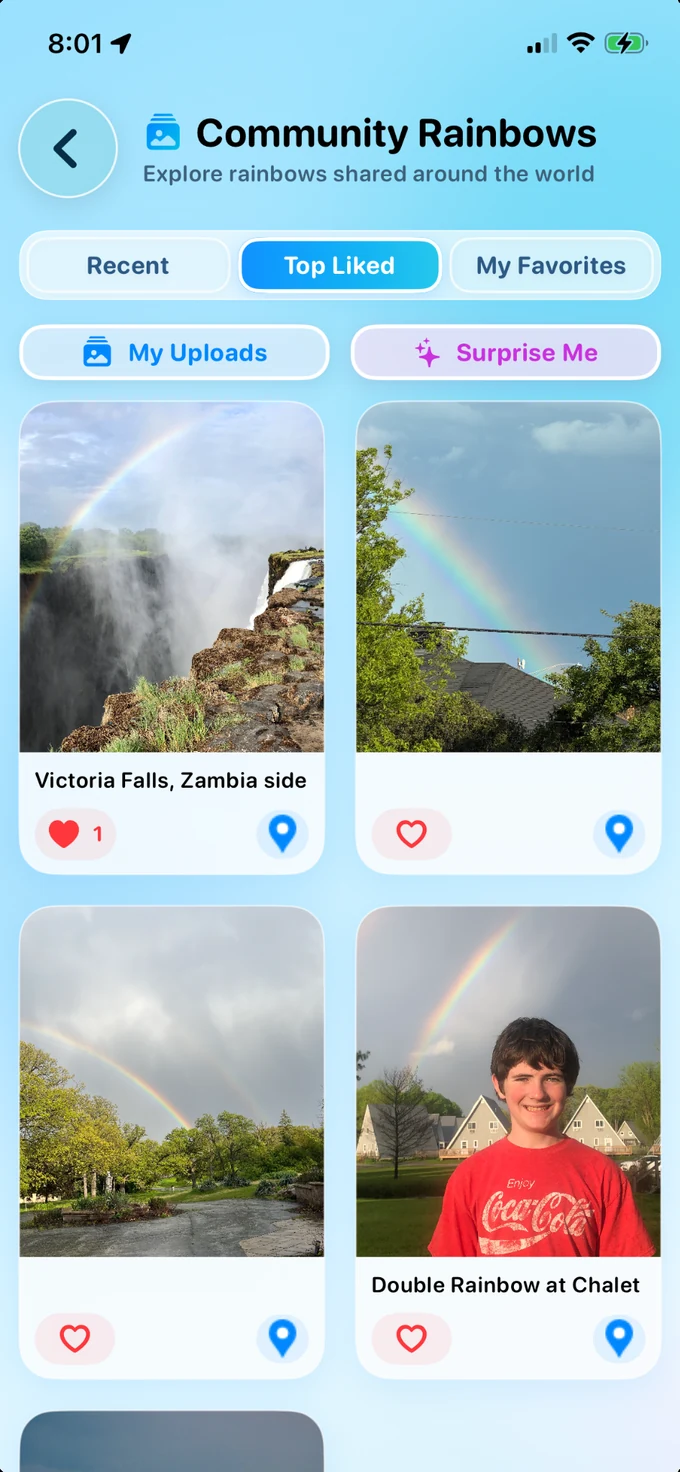
Community rainbows
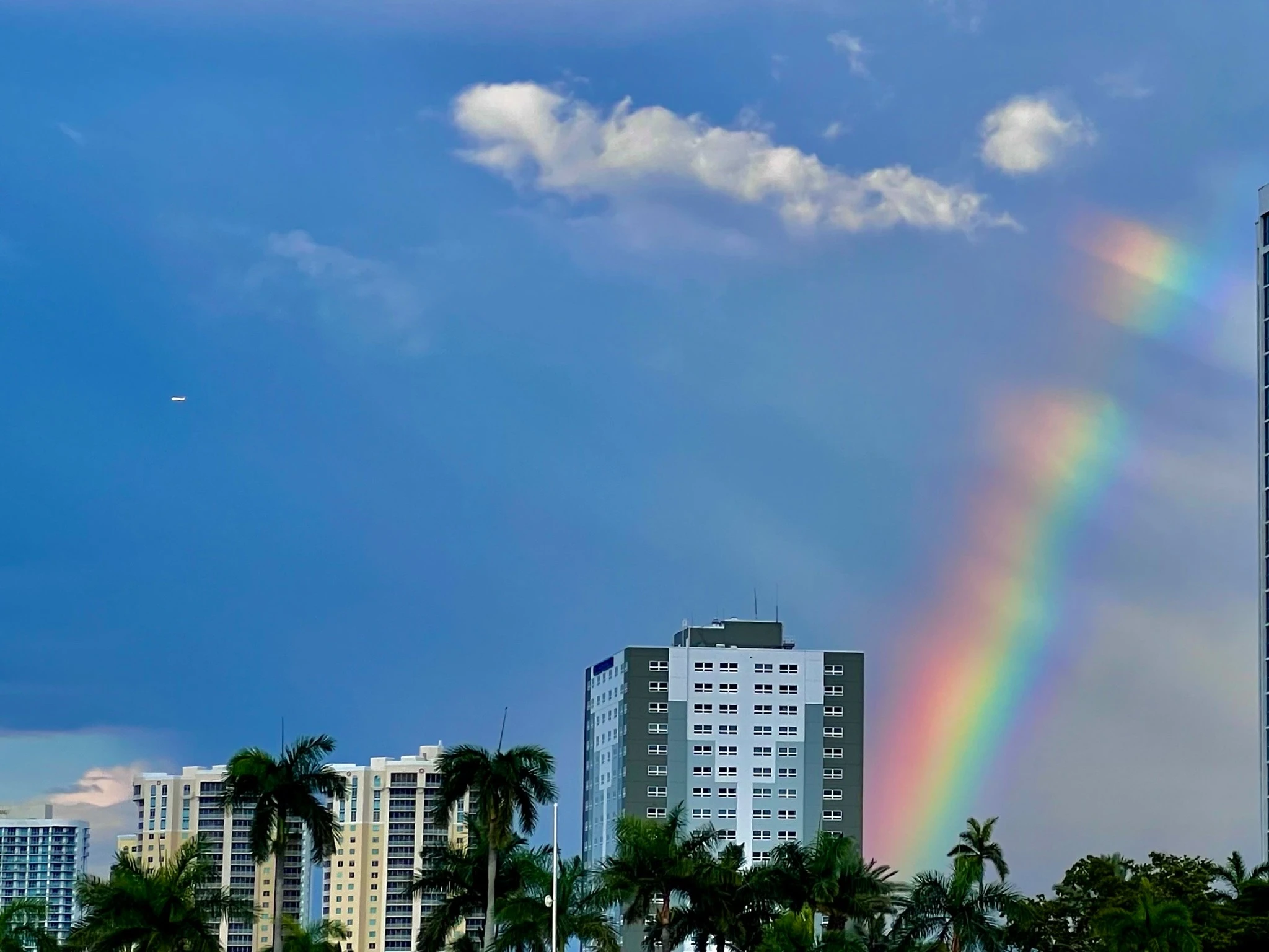
Browse sightings, save favorites, and share your own rainbow moments.
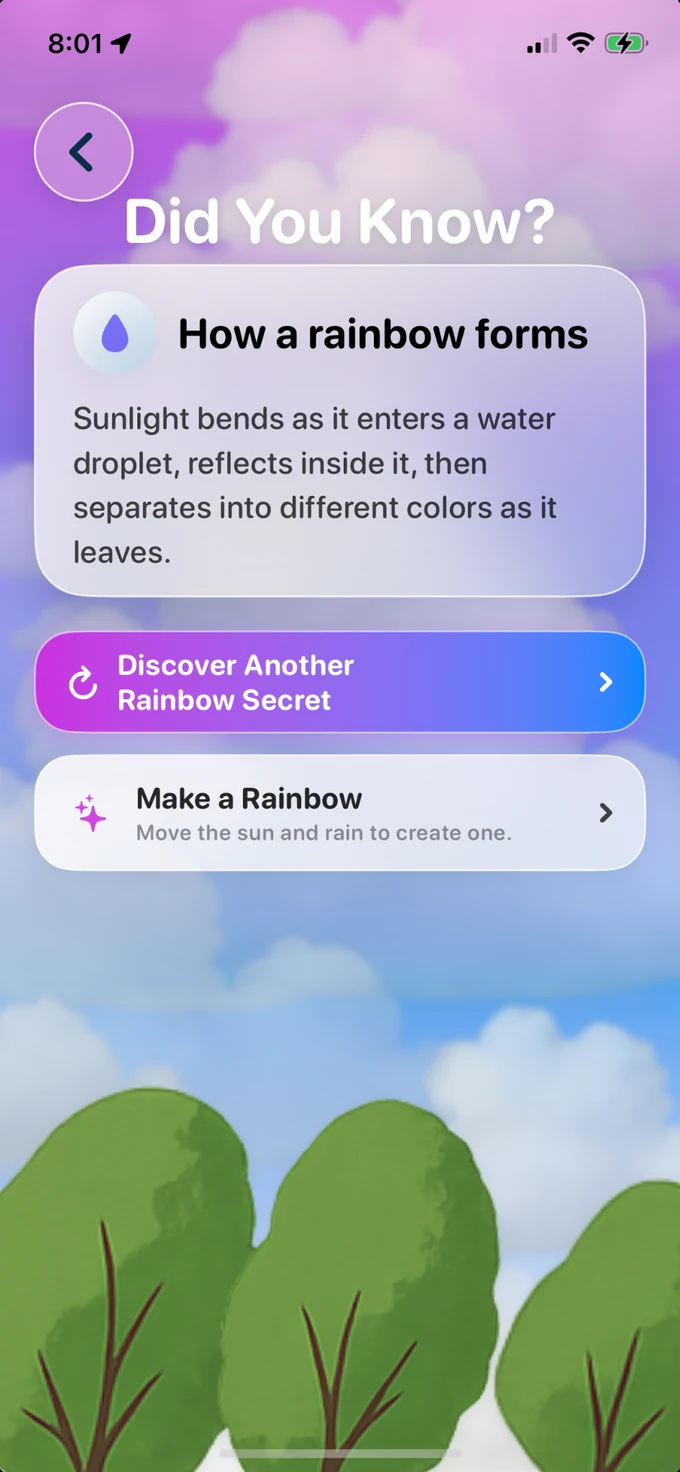
Learn and explore
Try rainbow activities, improve photos, and discover the science behind each prediction.
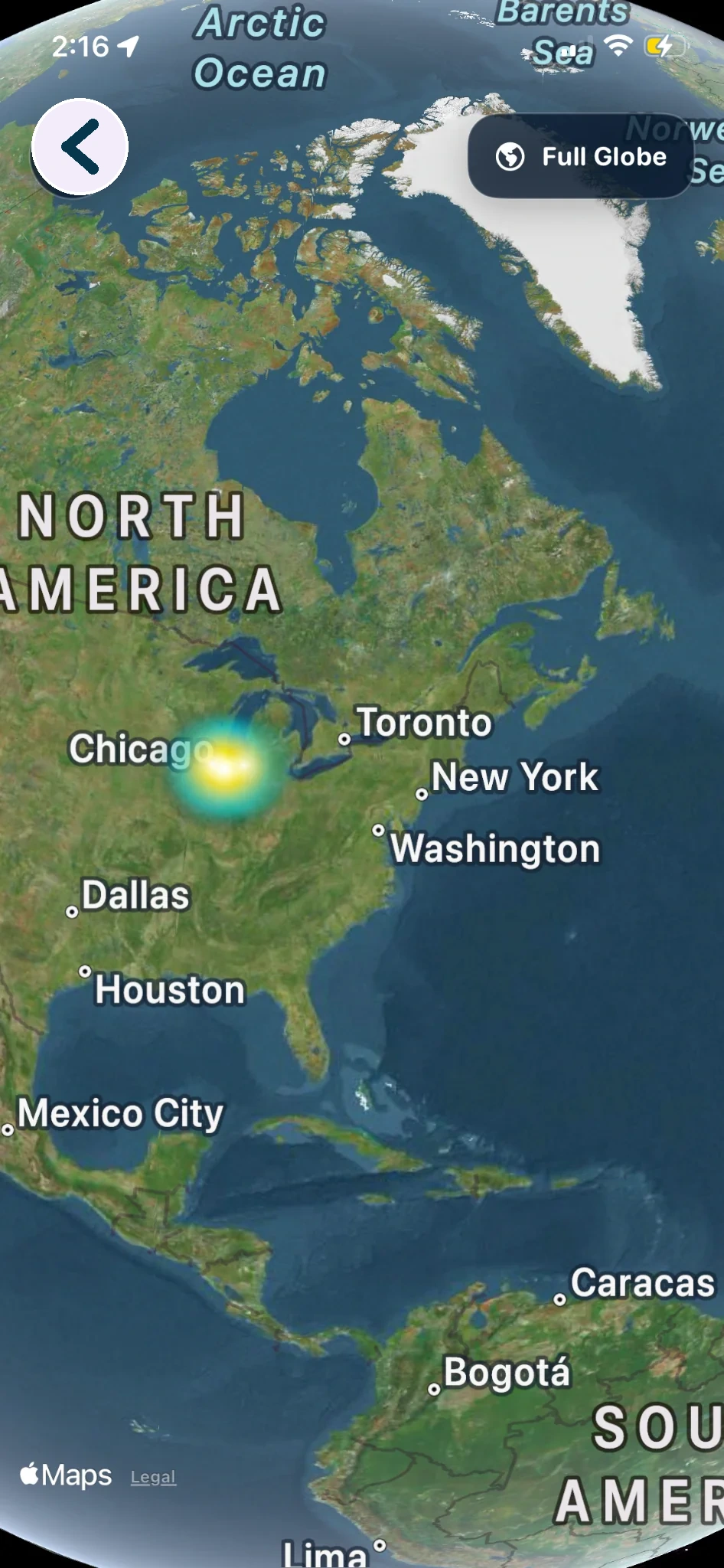
Globe exploration
Follow glowing locations and open rainbow photographs from around the world.
Shared moments
A community built around looking up.
Catch a Rainbow is not only about prediction. It is a place to notice, share, and explore real rainbow moments together.
Add your own rainbow moment
Signed in users can upload photographs, add captions, and choose whether an upload stays public or private.
Browse Recent, Top Liked, and Favorites
Discover new sightings, revisit favorites, and help wonderful community photographs rise to the top.
See where rainbows appeared
Follow the glowing globe to open sightings by place. Locations are shown as general areas rather than exact private coordinates.
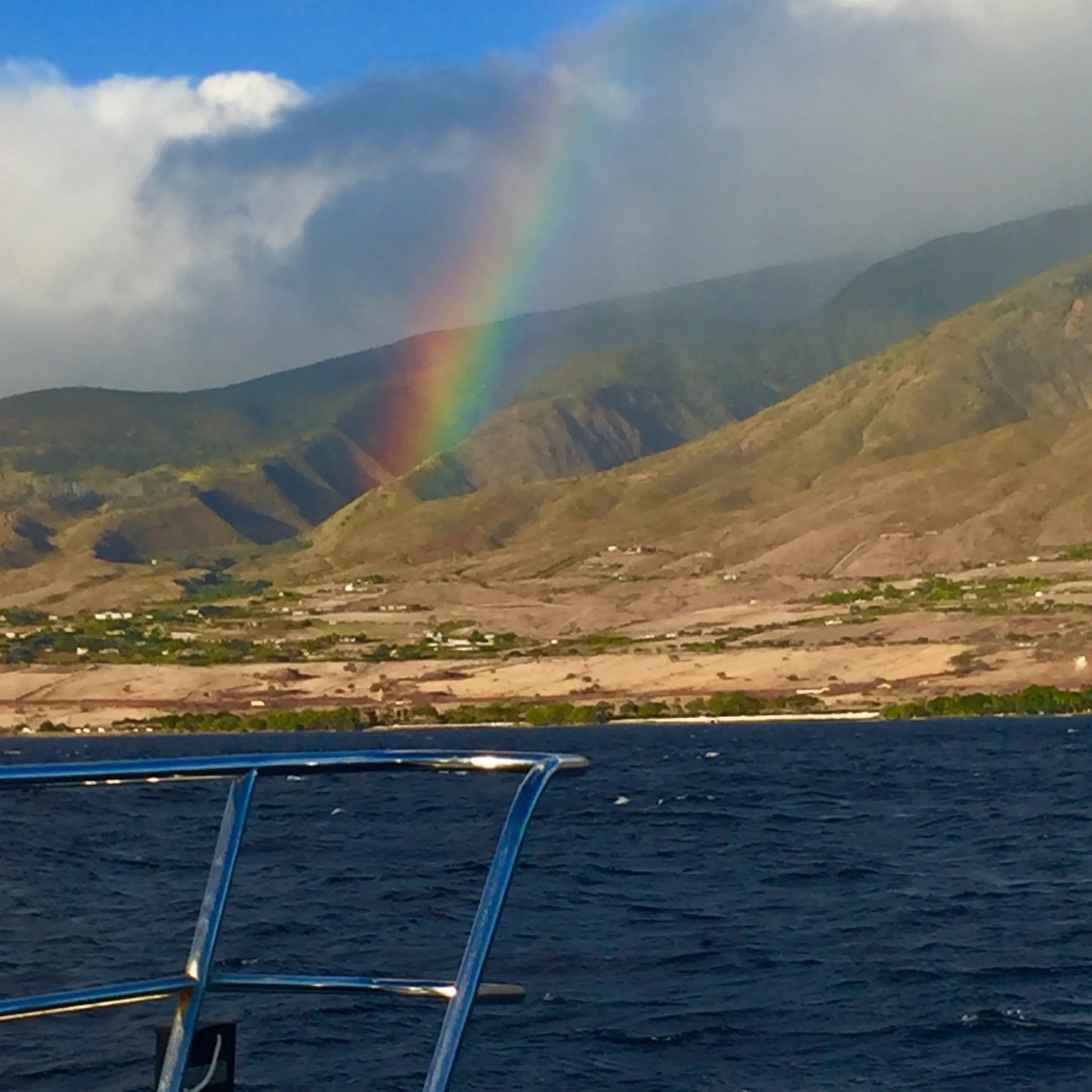
How predictions work
How the app predicts rainbows.
What catch a rainbow checks together before it says conditions look promising
This page explains how catch a rainbow makes a prediction. The app is not just looking for rain and sunshine in the forecast. It checks the rainbow physics, compares weather data, and looks for the specific conditions that make it worth checking the sky. These checks happen together, because a rainbow needs sunlight, water droplets, direction, timing, and visibility to line up at the same time.
Sun Angle and Rainbow Geometry
First, it calculates the solar elevation, which is how high the sun is above the horizon. For a rainbow to be visible, the sun generally needs to be below about 42 degrees. It then looks toward the antisolar point, the area of the sky directly opposite the sun, because that is where the rain or water droplets need to be from your point of view.
Rain in the Right Direction
The app checks radar reflectivity, which shows where precipitation is located and how strong it may be. It also looks at how that precipitation is moving, how far away it is, and whether it is actually in the part of the sky where a rainbow could form.
The Sunlight Path
Sunlight matters just as much as rain. Catch a Rainbow checks cloud cover at different levels of the atmosphere and looks for a sun corridor, meaning a clear enough path between the sun and the falling water droplets. It also considers visibility, direct sunlight, cloud height, solar radiation, and nearby terrain that could block sunlight when the sun is low.
Six Data Systems
Rather than relying on a single forecast, catch a rainbow cross checks information from six carefully chosen weather and environmental data systems. These include professional forecast models, live radar, cloud and sunlight data, airport weather observations, solar radiation measurements, and elevation data. These are the same types of tools used by meteorologists, pilots, and weather researchers.
National Weather and Aviation Tools
For precipitation, catch a rainbow uses information from the National Oceanic and Atmospheric Administration, usually called NOAA. NOAA is the United States science agency that studies the weather, oceans, and atmosphere.
One of NOAA's tools is called MRMS. It combines information from many weather radars and other observations to create a clearer picture of where rain is actually falling.
Catch a Rainbow also checks the same airport weather reports used by pilots and meteorologists. These reports are called METARs, and they include real conditions such as visibility, cloud height, wind, and current weather.
No single source can show the whole sky perfectly, so catch a rainbow compares them to find where the data agrees, notice where it does not, and determine whether the physics of a rainbow actually lines up.
Testing Against Real Results
Catch a Rainbow is tested against real rainbow sightings, uploaded photos, sky reports, radar history, and times when the app gets conditions wrong. Those misses are important because they help show which part of the prediction needs to improve.
Weather is still incredibly local. A small shower, a narrow break in the clouds, or sunlight reaching one neighborhood but not the next can make all the difference. Catch a Rainbow cannot promise that a rainbow will appear, but the prediction is based on real physics, strong weather data, and a lot of testing.
The story
How catch a rainbow began
Catch a Rainbow began with a debate among friends about which was better: sunsets or rainbows. I argued that rainbows are rarer, more surprising, and deserve a little more attention.
I built this app to help people notice when conditions might be right, share the rainbows they find, and bring a little more happiness and a few more smiles to someone’s day.
I believe in community. We notice more, learn more, and make things better when we share what we see and help one another. Together, we are better.
Catch a Rainbow is still growing, and kind, thoughtful feedback from the community helps make it better.
Coming soon
Catch your next rainbow.
Catch a Rainbow is preparing for an App Store release. Feedback from thoughtful sky watchers is always welcome.
Published by ColorLife LLC. For help, use the support and feedback form.
Follow catch a rainbow